The PILCROW! Not so popular as the ampersand (&), nor so cultish as the interrobang (!?, or ‽), and ok, not so fun as the manicule (☛). As fascinated as I am by a good ampersand, there's something about the humble pilcrow that has always appealed to me. What the hell is it, why is it shaped like that, why the fidget is it called, of all things, pilcrow
? I'll give you the brief and then send you off to learn more from those more learned and academic than I.
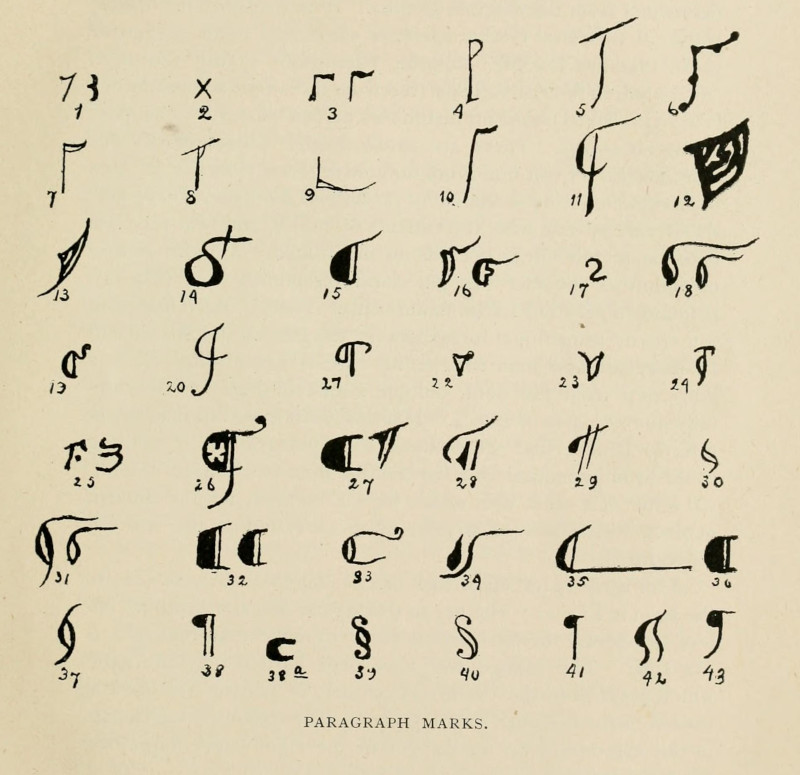
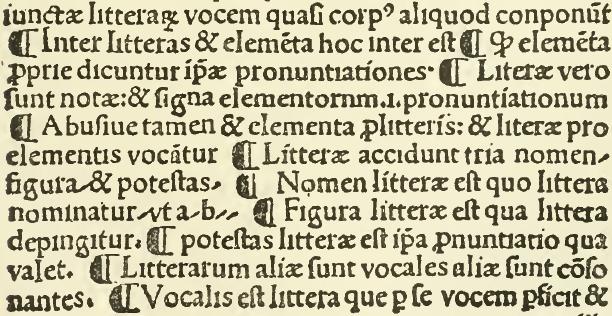
The pilcrow is of course more commonly known simply as the paragraph symbol. Wiki informs me it is also known as a paraph and blind P (that might have been an angle for this blog: to use Stephenson's Blind Pew as a sort of mascot? eh??). Historically it was put before every paragraph, even when in the Middle Ages, scribes and monks didn't bother moving to another line: they'd simply separate the paragraphs mid-line with a pilcrow, or a capitulum, which is pretty much the same thing as a pilcrow, it just looks more like a capital C (⸿). Also, monks would rubricate the symbol to set it off against the main text, which is a fancy way of saying they made it red. Which of course explains why I'm using the red on this 'ere blog. Let's put one right here to demonstrate what it would look like. ¶ Here then I would start a new thought or however you consider a paragraph break. A new or alternate idea, as opposed from the previous? I should probably brush up on these things, as much as these technicalities actually matter. I like to at least have a sense of the rule
, good or bad, so that I can confidently break it, or twist it to my needs. Anyway. The red pilcrow stands out, right? Don't worry: I'm not about to subject you to a wall of text divided suchly. Such things we are safely beyond.
The etymology goes something like this: The Greek word for it was, appropriately enough, paragraphos, to write beside
, and denoted by a line. In Old French, the word became pelagraphe, and in 1440 the Middle English word was pylcrafte, which is also kinda wonderful. And then somewhere along the line it became corrupted or transformed into pilcrow. That's the very brief summary. Now we commonly call it what it was called originally, a paragraph symbol, although the actual symbol has evolved significantly. How often does a word revert back to the original?
The history of typography and all these weird little symbols we may or may not still use in any capacity, is wonderful. Those stacked asterisks above this paragraph? That's an asterism, for section breaks. I used to have a blog way back in the day where I refused to write out the word "and", & only used ampersands. Just, you know, for the fidget of it all, whyevernot. Thus, also, Pilcrow MONSTER. Because what an amazing top level domain. What does the Pilcrow Monster look like in your mind? Maybe I've been watching too many Star Wars shows that I kinda want the Pilcrow Monster to be a sorta knockoff Yoda-variant. Yoda's my all time favorite. The Pilcrow creature's for sure not gonna be some big lumbering thing. Maybe, as the second syllable suggests, it would sport some inky black wings? some sort of feathered gargoyle...?
Lemme throw you a couple links regarding this pilcrow thing.
- Shady Characters by Keith Houston: The Pilcrow, in three parts. Highly recommend his book and website if you're curious about such things. Much easier to read than:
- The History of the English Paragraph by Edwin Herbert Lewis, 1894, scan on The Internet Archive. That's where the first image in this post is from. No: I have not read this book, nor even the full section on the pilcrow, but I might have to rectify that soon.
- Pilcrow on Wikipedia. Because sometimes you just want some straight answers to basic shit.